
The ghost of fashion trends too soon forgotten

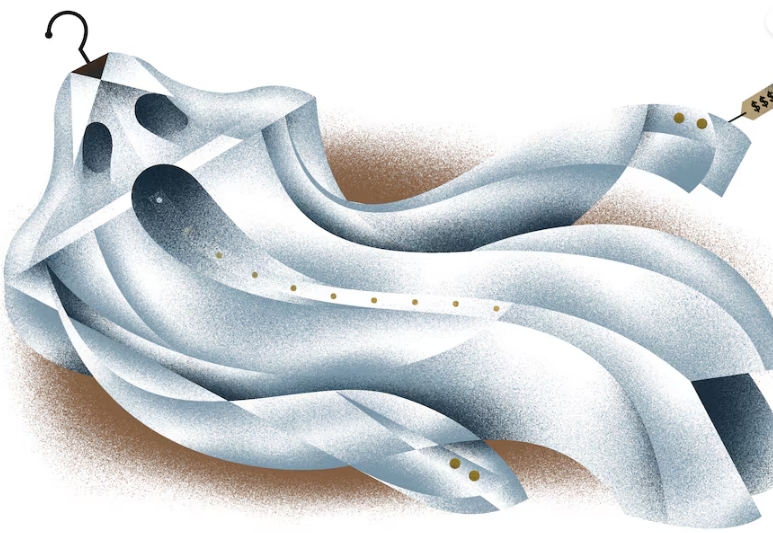 What’s driving the appeal of the constant churn of internet aesthetics and, more importantly, is it a sustainable way to engage with fashion?ILLUSTRATION BY DAVE MURRAY/THE GLOBE AND MAIL
Fashion friends and followers, we are gathered here today in memory of trends gone too soon.
Quiet luxury, we hardly knew ye. Cottagecore, we expected more. Coastal grandma, you’ve reached nirvana. You were just three of an incalculable glut of hyper-niche, gratingly named trends whose short-lived viral fame left us with little beyond a hashtag to remember you by. (No encore for goblincore!) You were born on TikTok and grew up too fast, just in time for us – or “The Algorithm” – to discard you.
In the last few years, social media has amplified an endless cycle of absurdly specific aesthetics and fashion fads with a shorter lifespan than a mayfly. TikTok builds them up before turning them to algorithmic dust. They rarely stick around long enough to affect our wardrobes.
Office dress codes may be modernizing, but I don’t see too many human rights lawyers or project managers on my subway commute dressed in Diane Keaton drag (coastal grandma). At downtown bars, I rarely see a mass of young people and wonder if it’s the cast of Anne of Green Gables (cottagecore). It may seem like these trends are just “Like” bait but their breakneck cycle encourages hyper-consumption, even though, ironically, many of these aesthetics romanticize slower, rural lifestyles and “anti-fashion” styles.
What’s driving the appeal of the constant churn of internet aesthetics and, more importantly, is it a sustainable way to engage with fashion?
Aissatou Leye, a fashion content creator from Toronto who runs the Instagram streetstyle account @416fits, tracks the lifecycle of these aesthetics. Usually, a popular TikTok creator will identify or name a fashion trend first, prompting a deluge of fellow creators and regular users to create content about it. But just as quickly as social media platforms beam this content to the feeds of people around the world – and the fashion news media scramble to report on it – the trend becomes passé.
Leye says that the people who are aware of these hyper-specific aesthetics are “chronically online,” and even if the style does translate offline, it’s usually in a more practical way. “I’ll notice someone might be wearing a specific sweater and I’ll be like, ‘Oh, they probably would be part of this specific aesthetic, or they probably listen to this sort of music,’” she says.“I do think, in some ways, it is people just trying to find community online,” Leye says about how internet styles gain traction in the real world. “Especially with such a loss of third spaces as we grow up. And after COVID, it’s much harder to feel connected to people around you. If you can leech on to certain items or ideas, music and art around you, it can make you feel closer to other people.”
J’Nae Phillips, a cultural analyst, fashion columnist, and creator of the Fashion Tingz newsletter, says that in a fragmented world, these online communities foster a sense of camaraderie that is increasingly hard to cultivate offline. “I think that in this day and age, people gravitate toward hyper-specific fashion trends because it satisfies a fundamental human need and basic desire for belonging and self-expression,” she says. “In a digital landscape teeming with infinite possibilities, such aesthetics, however niche or mainstream, transcend geographical boundaries and allow people to find validation among like-minded peers who share their passions.”
Leye similarly observes not a fervour for fashion itself in these online communities, but how the conversation around these trend cycles connects people with similar interests and creates a space for discourse and distraction in equal measure. Phantom nostalgia for bygone eras such as the ‘90s drives young people to piece together some semblance of the subcultures they’ve observed, but were born too late to participate in. “People want to go back to that, but also make it more modern,” Leye says.
Community-building aside, the insular nature of online trend cycles obscures their real-life impact. Nonstop engagement is unsustainable and supercharges clothing production to meet demand that may never materialize. “Designers face relentless pressure to churn out new collections, leading to creative burnout, compromised quality and stuff we’ve all seen before,” Phillips says. “Meanwhile, manufacturers and factories struggle to keep pace with the demand for quick turnarounds, often resorting to exploitative labour practices and environmentally harmful production methods. And us, the consumers, struggle to keep up with the financial and emotional toll of the trend cycles and the relentless pursuit of newness.” Generations of fashion followers have felt these pressures, but today’s 24/7 media culture means TikTok, Instagram and other platforms need trends to move from the In list to the Out list faster than a monthly magazine or semi-annual runway collection. In lieu of sweeping structural change, the only way around this system is committing to shopping more sparingly and intentionally. Getting dressed should be a personal pleasure, after all, not a TikTok diktat.文章来源: theglobeandmail


TKFFF公众号
扫码关注领【TK运营地图】

 已认证
已认证